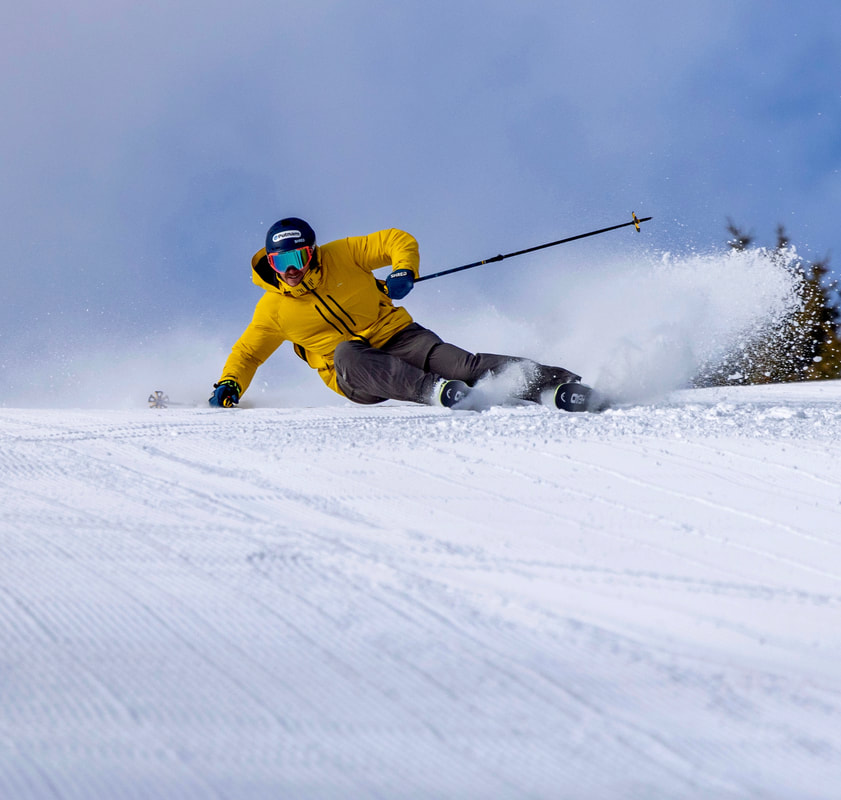
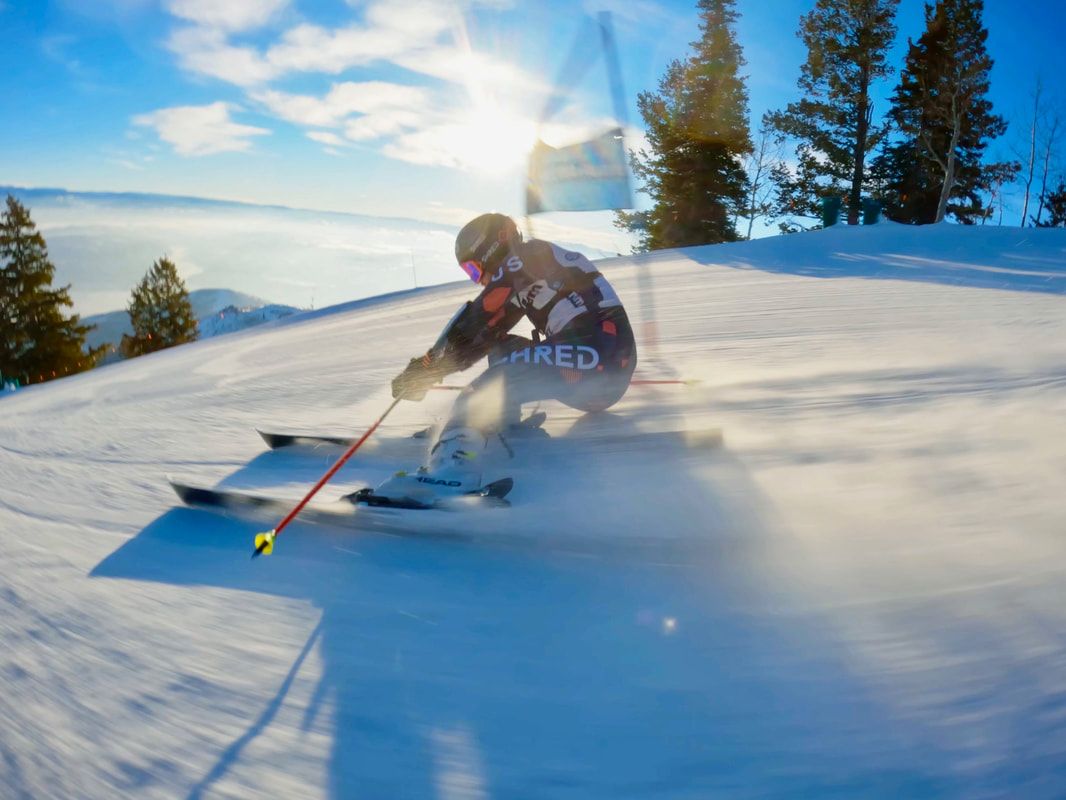
After going home to Park City for 5 days over Xmas, I thought I was going to get some productive training in Soelden to prep for Adelboden and the rest of January. No such “luck”, it snowed a ton in the days before I got there and while we were there making training useless. No complaints though instead we skied epic powder, might not be the best for race prep but after seeing no snow in PC it was nice to use the fat boards and have some fun. The fun continued after the race in Adelboden which as it turns out is an awesome mountain, they just don’t like it when you ski in the trees. Opps. Below is some of the fun taken from my GoPro.
01 | 03 | 2012 Great Letter to FIS by David Dodge
Finally someone with a science and equipment development background broke down the new ski rules that FIS calls (they must have a very loose definition) “scientifically proven”.
Copied from skiracing.com
The following letter has been sent to FIS officials and others suggesting that the scientific logic behind the changing of ski regulations for safety reasons is flawed. It was sent by David Dodge and contains considerable research. Ski Racing urges all concerned to read it.
To:
FIS President – Gian Franco Kasper
SRS President – Michael Schineis
FIS Alpine Executive Board – Bernhard Russi(SUI), Janez Flere(FIS), Niklas Carlsson(SWE), Herwig Demschar(USA), Reno Fleiss(CRO), Janka Gantnerova(SVK), Janne Leskinnen(FIN), Svein Mundal(NOR), Hans Pum(AUT), Ken Read(CAN), Fabien Saguez(FRA), Reinhard Schmalzl(ITA), Walter Vogel(GER), Toni Vogrinec(SLO)
FIS Legal and Safety Committee – Jose Luis Marco (ARG), Christopher Moore(CAN), Tsvetan Atanasov(BUL), Frits Avis(NED), Sortiris Babatzimopoulos(GRE), Marco Cozzi(ITA), Marco De Robles(SPA), Dean Gosper(AUS), David Howden(NZL), Klara Kaszo(HUN), Jerker Lofgren(SWE), Fransois-Kavier Manteaus(FRA), N.N(ISR), Alex Natt(USA), Naralia Ovchinnikova(RUS), Corinne Schmidhauser(SUI), Franz Steinle(GER), Robert Wallner(AUT), Sean Wilken(GBR), Katarina Zajc (SLO)
CC: Oslo Sports Trauma Research Center – Tone Bere, Tonje Wale Florenes, Trone Krosshaug, Lars Nordsletten, Roald Bahr; University of Salzburg – Erich Muller
The intention of this letter is to bring to the attention of the FIS that a large body of scientific evidence is at odds with the conclusions underlying the 2012-13 equipment regulations and that the studies used to develop the new 2012-13 equipment regulations do not constitute scientific proof.
The new skis were “scientifically proven to enhance athlete safety and reduce risk of injury,” F.I.S. said in a statement. “The meeting participants jointly agreed that the goal of the entire equipment review process is to only implement new rules that are scientifically proven to enhance athlete safety and reduce risk of injury” says an August 24th 2011 FIS press release. The studies referenced as “proof” were well conducted, the conclusions are disputable but not unreasonable and they are an important addition to the scientific body of evidence. However, the science as it exists now is not settled and the studies the FIS used to draw their conclusions certainly do not amount to proof.
I feel it is very probable that the unintended consequences of the FIS decisions will cause more injuries than will be prevented. I feel the FIS should reconsider their actions and take a slower more careful approach to equipment change that does not unnecessarily put at risk the health and safety of thousands of athletes.
The new skis might be safer, but I believe it much more likely they will be more dangerous. It can not be proven one way or the other, but the FIS decision forces thousands of athletes to accept this unknown risk to their health and safety in order to participate in their beloved sport. The ski industry will spend ten’s of millions of dollars developing and producing the new skis. If the FIS’s bet that the skis will be safer is wrong the liability is huge. Can the FIS survive if the new equipment decisions turn out to be wrong? The FIS can not say they were not warned.
I believe that increasing the length and increasing the sidecut radius for competition GS skis from the current 185cm minimum length and 27m minimum sidecut radius to 195cm minimum length and 35m minimum sidecut radius will have the following effects:
Non-linear control response – unstable leg geometry.
Higher probability of Phantom Foot ACL injury.
Non-linear control response
The Salzburg study shows that loads on the skier are reduced on longer, larger sidecut skis compared to the current 185cm, 27m sidecut skis. Their tests assume the load reduction is due to the ski differences but I believe it is more likely due to the fact that the comparison was made between a ski that was very familiar to the testers and several that were unfamiliar. I argue that the testers would have generated lower loads on any ski they were not familiar with and the ski design differences did not play a significant roll in reducing the measured loads. Athletes will find ways to use 100% of their strength no matter the equipment. This is what athletes do.
The geometric relationship between sidecut radius, edge angle and turning radius is well known to all ski designers. The theory shows that a 35m ski will have the same turning radius as a 27m ski if the ski is tipped on edge approximately 7 degrees more in a typical WC GS turn. The edge angle must be increased relative to the skiers COM (center of mass). In other words to ski the same line at the same speed the skier‘s COM must be in the same place, but the ski must be edged 7 degrees more. Thus more knee angulation. Athletes will discover that more knee angulation will allow them to ski the same line at the same speed as they are accustomed to skiing on their 27m sidecut skis vs. 35m sidecut skis. More knee angulation will cause an unstable leg geometry leading to uncontrollable, non-linear, generation of loads.
A typical WC GS skier on current skis will angulate in such a way that a line from the inside edge of their outside ski through the center of their knee will fall slightly outside their COM. This leg geometry is stable as a sudden increase in load will cause the edge angle to be reduced and the load to be reduced during the abrupt transition giving the athlete time to react appropriately.
The line from the ski edge through the knee of a skier using 7 degrees more knee angulation will fall well inside of the COM. This leg geometry is unstable as a sudden increase in load will cause an increase in the edge angle as the knee collapses inward leading to additional loading, leading to additional knee angulation, more loading, and so on until the skier can react. By the time the skier reacts this load generation can cause serious injury and/or loss of control. This is a non-linear reaction to natural control input and is to be avoided at all costs. Aggravating this problem is the likelihood that more knee angulation will make it more difficult for the inside ski to track parallel with the outside ski since adding more knee angulation on the inside leg is very difficult. This may encourage the skier to transfer weight from the inside ski to outside ski thus increasing the load on the now more vulnerable outside knee.
A supporting fact is that many of the best WC skiers choose skis with larger sidecut radii than the allowed minimum 27m and 23m for men and women respectively. For example Ted Ligety and Lindsey Vonn use 29m and 27m sidecut radii, respectively. It is reasonable to assume that Ted and Lindsey prefer these skis because they encourage postures that are stable, strong and safe. A less accomplished or weaker skier would need more sidecut to achieve the same postures. Too much sidecut for the skier’s ability and strength causes the line of force to fall too far outside the COM. Too little sidecut for the skier’s ability and strength cause the line of force to fall too far inside the COM. Both are undesirable, especially the latter.
The well known geometric relationship between sidecut radius, edge angle and turning radius shows that a 35m ski will fit the FIS description of a ski that is “too aggressive”. Of course it would take some training time on these 35m skis for the athletes to learn that they can ski faster using more knee angulation so it is unlikely to show up in short term tests.
Skiers should be allowed and encouraged to choose skis with sidecut radii that promote the most stable, strongest and safest postures. Coaching guides should be developed to help athletes achieve better postures through a better understanding of the relationship between ski design variables and skier postures.
The geometric relationships described above are well known and understood. The implications can not be responsibly dismissed or ignored.
Higher probability of Phantom Foot ACL injury
The Slip-Catch injury mechanism is identified in the Oslo3 study as the predominant cause of knee injuries on World Cup athletes. It is in my opinion a combination of the well known Phantom Foot and BIAD mechanisms. A review of the video and pictures included with the Oslo studies show a loss of edge grip on the downhill (outside) ski followed by a transfer of weight to the inside (uphill) ski. Prior to the loss of grip the skier’s center of mass (COM) was balanced between the skier’s feet. The sudden loss of grip on the outside ski caused an out-of-balance situation with the center of pressure suddenly moving uphill and forward causing the skier to start falling downhill and backwards. This backward rotation combined with the downhill rotation produces a precessional rotation on the third vertical axis that rotates the skiers mass away from the hill. Of course all these rotations are undesirable and the skier responds by retracting his uphill ski to reduce the forces throwing him out of balance. This allows the downhill ski to reengage. In order to arrest the unwanted rotations the skier naturally pressures the tail of the ski to correct the backwards and downhill rotation, but this creates an uphill rotation acting against the precessional downhill rotation of the skier’s COM (Center of Mass) causing the skier’s upper body to twist downhill, producing an internal-valgus rotation of the knee joint.
The skier is now in a position universally recognized as the final stage before a Phantom Foot ACL rupture except that his leg is relatively straight. Please note the ski sidecut had nothing to do with this scenario. All that is needed is a specific set of out of balance rotations and a lever extending backwards from the foot.
If the ski has less grip in the tail the skier will continue to fall backwards; the ski will skid and continue to rotate uphill due to the slope of the snow surface relative to the skier’s COM. If the skier fights these rotations with sufficient vigor he will most probably rupture the ACL on the downhill knee in a classic Phantom Foot posture. If he gives up the recovery attempt, pulls his body into a safer posture and lets the fall progress naturally he will almost certainly avoid an ACL injury. No WC racer is likely to do this without extensive training on how to avoid the Phantom Foot trap. Ettlinger et al5 have shown that such training can dramatically reduce the likelihood of Phantom Foot ACL injuries.
If the ski has aggressive grip in the tail the skier may be able to reverse the backward and downhill fall, re-center his for-aft balance, quickly enough that he is able to reengage the uphill ski in a way that arrests the downhill rotation without resorting to twisting his upper body in a way that applies the injury producing valgus-internal rotation of the downhill knee.
Supporting the above analysis is a large (34 year, 6,780,940 skier day) epidemiological injury study by Ettlinger et al4 showing that the knee injury rate has increased steadily from 1972 until approximately 1992-1993 unabated by all the equipment developments during that time period. Since 1992-1993 the trend has reversed. Shorter, shaped skis became popular in the 1992 -1993 time frame. Superior edge grip at the tail, stronger self steering effect and the shorter length are the differentiating features of these skis compared to the older skis they replaced. It is therefore reasonable to conclude that one or more of these features lead to the reduced knee injury rate.
It is clear that a less aggressive ski will reduce the forces that appear to contribute directly to the injury in the Slip-Catch scenario. However a less aggressive ski limits the skier’s ability to arrest the rotations that lead to Phantom Foot type injuries.
Equipment related solutions to the above scenarios are not very well understood, but my opinion that a longer ski with less sidecut will increase Phantom Foot injuries is reasonable. The implications can not be responsibly dismissed or ignored without further investigations.
Conclusion
I believe the FIS is recklessly endangering thousands of athletes participating in their sanctioned events by irresponsibly ignoring or dismissing large bodies of scientific evidence, the opinions of many experts and the gut instincts of the vast majority of coaches and athletes. I believe that the FIS is forcing the industry to spend ten’s of millions of dollars to develop and manufacture skis that may turn out to be too dangero
12 | 17 | 2011 V Pay Alpine Rockfest.
On December 23, I will be racing in the V Pay Alpine Rockfest in Paganella, Italy. It will be the second race of its kind; the first was in 2009 in which I was 4th. I’m very excited for this race since it’s the best-run race; it has a great format to compete in and to watch and it’s nice to have races outside the monotony and monopoly of FIS.
I’ve always believed ski racing is presented and formatted poorly. I can’t think of any successful sports that have a 3-hour half time and fans only see their favorite athlete twice for a max of 4 minutes. I can’t imagine going to a basketball game to watch Lebron James play for 1 minute then wait 3-hours to see him play for another minute. It would not make sense for TV or the fans. Yet this is how a ski race is run. I race at 9am for 1 minute 20 then wait until 1:30pm to do my second run. How is a fan supposed to get into that, live or on TV? Suppose ski racing had to keep the two run format and had to have 70 racers in the field; make the second run 15 minutes after the last racer first run. Instead of setting a whole new course for second run just redress the course and do a little course work then race without an inspection. (That goes for GS, in slalom have both courses set in the morning and we have to inspect both before the first run). If number 70 qualifies they would have to hustle but that’s similar to what we do in training. Though this still doesn’t solve the problem of TV presentation and lag time for fans at the venue since most people only pay attention to the first 30 racers.
If I had my druthers’ I would cut the field to 35-40 racers have a 30-40 second course, have 5 runs all on the same course and after each run the field gets cut in half (30, 16, 8, 4, 2=winner). (The top 30 get to start every race but the next 5-10 qualifies through Europa Cups). When you get to the finish you jump on a snowmobile to the start and go again, (If you qualify). This would create constant action and if you are say an Aksel Lund Svindal fan you can see him race several runs. This is similar to how the Alpine Rockfest is done which is more enjoyable to race and watch.
Along with formatting changes, every GS and SL should be held at night. That way most tourists near the area of the race (significant number in most winter resort areas) would come to the race for evening entertainment, instead of now most skiers prefer to ski during the day, so the race misses a huge number of spectators at the venue and on TV because people are skiing. (As they should be). This would also create a party atmosphere since there could be a band playing (like Rockfest) which would draw more then just hardcore ski fans, which should be the goal.
Downhill and SuperG would unfortunately not benefit from these changes but something needs to be done to make the speed events more exciting. Outside Beaver Creek, Kitzbuhel and Wengen, most downhills are pretty boring to watch unless you’re somehow intimately involved. Downhill used to be far more exciting when the jumps were huge, racers were going straight and the tracks were bumpy and icy. Now they have no real jumps, just sweeping turns and are mostly smooth which has made them far easier and in many cases more dangerous. (Counter intuitive I know, but smoother courses are generally faster. Jumps and bumps slow racers down more then the current use of chicanes and wider turns. Grugger’s crash was because of the turns above the Mausefalle, not the jump). What they should do is on courses like Lake Louise, Garmisch or Val Gardena etc is build artificial terrain, more jumps perhaps bank turns, whatever get creative since most of those courses have 60 seconds or more of boring gliding. Downhill is hardcore and dangerous. Yet most downhills don’t look it or feel it, until a racer’s in the hospital.
Aside from formatting changes and such ski racing needs to utilize the technology out there. There is no reason that racers’ current speed should not be on the Jumbo-tron and on TV as the racer is competing. Camera angles are also a problem; coaches on the side of the hill often shoot better footage (not in quality but in show casing skiing) then the TV crews. Most TV angles don’t show our speed and the difficulty of the hill well, there are many creative ways (Rockfest had a cable cam last time) to shoot us in a more appealing fashion.
There are ways (far more then the one’s I’ve mentioned) to make this sport more popular and cool again. Unfortunately the one’s running World Cup and FIS are stubborn, controlling and clueless. Instead of investing in making our sport better they are slowly breeding it dry by creating stifling rules and running a monopoly on ski racing. It’s events like Rockfest that can breath new life into ski racing. If only there were more like them.
More info at www.vpayalpinerockfest.com
12 | 17 | 2011 Head Skiers United Episode 4
Best one yet!!!!!!
12 | 16 | 2011 New food bus
Over the last couple years we have been traveling in Europe with a food bus. It has been a great addition to our team since the hotel food on the tour is not always that edible and rarely healthy. Adam Korzun has been the chef since year one. Besides him being an awesome cook, he’s not a horrible guy to be around either. Over the years the bus has evolved from a food cart similar to the one’s you see outside sporting events or Hollywood sets to a full trailer with a bedroom and this year we have a new semi truck with pop outs. It’s pretty ridiculous. Below are some pics.
11 | 24 | 2011 HEAD Skiers United Episode 3
Here is the Head Skiers United video I did with Al Svindal, and James Heim. Pretty funny.
11 | 23 | 2011 Coach Hans Olsson
Last week I wrote about my lack of gliding skills and how frustrating it was to get killed on easy flat downhills. Some of the best gliding advise I gotten, was from Hans Olsson (one of the World’s Best Gliders) last year when he said I should point my toes in my boots when gliding which has helped. Normally I ski with dorsi flexion (pulling toes up) to get more ankle flexion and have better edge control, but this has turned out to be slow when gliding. Seemingly in response to last weeks post Hans posted “Tuck like a champion” on his blog: Hans-Olsson.com
Copied from his page
Tuck like a champion. November 18, 2011
Coming up on the mountain this morning, things were not looking very good. 15cm of fresh powder on top of our freshly injected hill, is normally = f####g Disaster!! I know you can do a lot if you get access to a ratrac & good coaches to give instructions, but today a new level of amazingness was reached. They turned up side down on the whole situation & took out some “gandalf the grey” magic & turned the hill into the icy pist we were looking for!!
Gs went well I must say. Feeling good with the setup.
Yes I´m in a Finish suit, my bag is still missing from my Frankfurt-Calgary flight, but they say its on the way now!!
I´m really satisfied how the DH skis felt on the test track today. although the snow was cold & aggressive they felt slippery & fast!!
So lets go over to some tucking instructions…
Are you a ski racer & have a hard time killing the flats, well listen up…
Tucking ABC..
What NOT to do.
*Do not go to deep in the tuck! That way you can´t absorb all the small bumps & its very hard to move smoothly during a turn.
*Do not lean forward & have pressure on the front of the skis. That makes the skis want to turn instead of floating nice on top of the snow.
*Do not dip you ass low to get the pressure on you tails, that makes your aerodynamic suck nuts+ you can´t absorb bumps in a effective way!
Do not go to a wind tunnel & try to find the best tuck possible. Just because its the best aerodynamic position dosen´t mean its the fastest position while skiing! Your stans, pressure points, absorbing abilities are way more important factors in the search of speed!
What to do…
*Try to have your ass as high up as possible, without dipping your arms & upper body to low. That creates a aerodynamic position that still allows you to move freely & relaxed!
*Make sure you have your knees in a perfect straight parallel position, imagen your self being a sled!
*Make sure to have properly bent poles that fits your tuck!
*Focus while tucking, use every little bump as your friend & try to create speed instead of loosing speed on them!
*If your not fast on the flats & you think its boring to work on your gliding skills… Well go & have some MC Donalds, make sure to super size your meals. Yes thats right, “meals” & not meal, one meal is for sure not enough!!
Questions will for sure be answered by Dr Liontuck!
/Hans
11 | 22 | 2011 Head Skiers United Trailer
The day after the Soelden World Cup Al Svindal, James Heim (big mtn extraordinaire) and I filmed a series of ski competitions. It was pretty hilarious. Below is the trailer. Look for the full episodes in the near future.
11 | 20 | 2011 Tyranny of FIS
FIS’s tyranny has gone on long enough. It seems FIS is going out of their way to ruin the sport. FIS runs a dictatorship. They demand absolute control then try to butter their will in a fake cloak of benevolence. Athletes, SRS (Association of Ski Racing Suppliers and NGBs (national governing bodies) are completely impotent in their ability to create positive change in our sport or to stand against rules FIS imposes.
I feel like I might be beating a dead horse on this subject but it is paramount for the future on ski racing. The new rules imposed on ski regulations can’t go through in their current state. They will eventually ruin this sport. As most people already know FIS is imposing new ski regulations that turn back the clock on the evolution of this sport. Giant Slalom has been unfairly targeted. Current rules are >27 meters radius (more sidecut) and minimum length of 185cm, new rules will be >35 meters radius (straight skis from 80’s) and minimum of 195cm. (I currently race on 29-meter radius, 191cm in length skis.) FIS has put together a study that has recorded injuries from 2006-2011. A time frame for which did not allow for any correlations to build between injuries and eras in equipment. We’d need the same info dating back to the early 80’s to see any injury to equipment correlations, not the last 5 years. In FIS’S study they say 36 skiers were “severely” (out for 28 days or longer) injured in downhill, 9 in Super G, 16 in GS and 11 in slalom. They didn’t not take into account that GS is the most skied event, everyone from downhillers to slalom skiers train GS. There are probably 200 GS runs skied for a single downhill run skied and in races there are 2 runs in GS as opposed to one in downhill. Without even doing math it is obvious that the injuries per run in GS are far less then downhill. This begs the obvious question that goes unanswered; why was GS targeted?
On the World Cup it is pretty rare when the vast majority of the athletes agree on anything. The ski regulations, particularly in GS have brought together the athletes like never before 41 out of the top 50 men signed a petition against the rules and in Soelden 15 of the top 20 men in GS (Austrians didn’t come) met to discuss the rules. (It should be noted that only 2 racers have advocated for the rules; Hannes Reichelt and Benjamin Raich along with one Ski Company Amer Sports or also known as Atomic and Salomon.) In which we all opposed the imposed ski regulations and agreed that the ultimate goal was to eliminate FIS from equipment regulation. As athletes we have the greatest incentive to be safe and healthy. We all know how short our careers can be and very few of us are compensated for the risks we take. Therefore, we currently and in the future choose equipment that not only allows us the ability to be fast but to make it to the finish line safely. I have on many occasions chosen skis that were slower but had better control instead of faster and uncontrollable skis. The equipment companies are highly incentivized to keep their athletes healthy as well. They have far more invested in us then FIS and NGBs so they want to protect us as their asset. FIS has shown that they don’t value athletes, as seen in this instance in their complete disregard for our input. FIS’s study was based around 2 on snow sessions with several Europa Cup skiers. Suffice to say that is not nearly enough data to come up with such dramatic conclusions. With just those two tests and with no input from athletes or coaches they pushed the rule though so that there was no opportunity to debate the proposals. The athletes, SRS and the coaches protested and have since proposed a World Cup test where the top 15 athletes would test the new equipment on a World Cup slope but FIS denied this opportunity to evaluation their hypothesis. Proof that FIS has little confidence that their research will hold up under further testing. FIS’s only goal it seems is to look like they are being proactive safety wise though they won’t bare the brunt of the consequences when they don’t work. By making these rules they can say they tried and that may somehow alleviate them of any liability.
FIS has already shown their incompetence in coming up with safer rules in the past. In 2007 they made a rule that made the skis wider which made the skis more aggressive which may have led to injuries by extending the lever arm thus putting more force on the knee. The new rules will make the sport more not less dangerous. Not only did FIS’s study say that there was no statistical difference in force between current skis and new skis but they didn’t measure the torque that will be needed to twist the ski around in a clean manner. Thus creating a larger force on one’s knee. The law of unintended consequences will kick in and most likely create more injuries. The latest generation of World Cup racers has never skied on straight skis so these new skis will be completely foreign (less controllable), making them/us get into awkward body positions and ski in a “jumpy” manner so that we can create enough force to turn them. We will also take a straighter line in which we will slide the top of the turn then hit the edge hard, creating a higher peak force (mostly centered around the bottom of the turn where force is highest already), while leaning back to get the radius needed, since the sidecut in the tip will not allow the ski to turn in a forward/centered body position. Outside of the injuries this type of skiing will create by creating a higher sheering force on the knee (commonly associated with ACL tears), it will also cause greater fatigue, which is one of the leading injury causes. The ski industry has produced many studies tracking millions of skier visits over the last 30+ years in which they have found the advent of sidecut has juristically reduced injuries (mainly to the knee). I’m more inclined to believe a study that has tracked millions of skiers over 30+ years then a study in which testing was concluded in 2 days with less then 10 athletes. Injuries happen when the athletes are taken out of their comfort zone and we will not be in our comfort zone with these skis.
So how will this ruin the sport? The new skis will make skiing at the World Cup level less enjoyable to watch and perhaps more importantly far less enjoyable to participate in while making it more dangerous. Arcing clean turns is a joy everyone racing now days can enjoy. That feeling will be gone. First World Cup athletes will suffer this fate then in a couple years when the rules become FIS wide 15 year old kids will have to turn in their “old” carving skis for long straight skis. This will give the big kids an even bigger advantage and will drive kids out of ski racing; into freesking or the copious amount of other sports kids have available to them. Another way it will ruin the sport is the economically side. Ski racing is to ski technology as Formula 1 is to car technology. This new rule will take that away from ski racing since anyone will be able to buy better skis in a store then we race on. Why would ski companies stay in racing if it were no longer driving technology and sales? Ski companies are the main financial supporters of this sport; the athletes make the majority of their income for their ski companies and the amount equipment built for World Cup skiers is astronomical. If the athletes are no longer driving R&D and sales, the companies will eventually pull their support. Most athletes struggle to make a living at this sport already and without the support of the ski companies most won’t be able to afford to continue racing. And there goes the sport of ski racing.
FIS’s tyranny doesn’t just cover ski regulations but all sponsorships too, from the size of your headgear sponsor to the speed suit to the logo on your goggles. I am particularly concerned about the goggle logo issue for the obvious reason that I own a goggle/helmet company; Shred. FIS has long had a rule that the logo on the goggle strap could not be larger than 15 square centimeters. The rule has been ignored for just as long as it’s been around and for good reason, you can’t read a 15 square cm logo on someone travelling at speed and it was never enforced. This fall, out of the blue FIS decided they were going to enforce this rule, for seemingly no reason. Enforcement now is apparently, first a warning followed by not being allowed to start the race on the second offense. Most logos currently are 40-50 square centimeters. There is no point sponsoring a ski racer let alone start a company based around ski racing when one’s logo is too small to be noticeable. This hurts small companies like mine the most since it greatly takes away Shred’s ability to get valuable impressions to break through. Outside of this rule’s enforcement being a bad idea, it was not made known to companies early enough so they could put together the logistics to comply or what will likely happen in the future, decide their marketing budget is better spent else where. Which gets me to the greater point of FIS seemingly trying to drain the pockets of the athletes, since a large portion of athletes’ income is derived from helmet/goggle companies. I would think it would be in the sports, therefore FIS’s best interest to create value for not only FIS’s sponsors but also the sponsors that allow the athletes to compete at a high level.
Not only will FIS not listen to rejections from SRS and NGB’s on the ski regulations and logo issues as a show of complete power. It wants to fine athletes for speaking out against FIS. I was threatened several years ago for wearing a “FIS SUCKS” sticker on the back of my helmet. (I was 2 minutes late to a pre bid draw meeting and forced to start 45 while I was leading the standings hence the sticker.) I was told that a similar action would result in a 5000 CHF fine. Most recently word is that FIS is thinking about suing Jon Olsson for his choice comments he made on his blog about the ski regulations and posting “FIS SUCKS” logo on his site. At the most recent FIS meeting they discussed punishments for athletes speaking out against them. I quote an excerpt from that meeting, “The Council agreed to develop a “Code” to deal with cases of improper behavior that fall outside the competence of the competition jury to augment the existing rules, such as blasphemy on social networking sites or bringing the sport into disrepute.” Who would have thought that being a ski racer you lose your right to free speech.
One would think there would be some discourse to combat these atrocities but there is not at this point. Apparently Bill Marolt; the President of USSA and Vice President of FIS doesn’t even have the ability to bring these subjects up for discussion, let alone reversed or revised. The athletes to this point have had zero representation in the decisions FIS makes. When we hear of FIS’s decisions and we disagree we are ignored as shown in Soelden. Faceless committees make these decisions, and once the mandates are passed down their ego doesn’t allow them to admit wrong and reverse rules that are so obviously wrong. Unfortunately for alpine ski racing FIS monopolizes the sport so any and all changes will be hard fought or take FIS vastly rethinking their position in how the sport processes or more likely regresses. Perhaps it’s time to unionize the athletes or start an alternative tour. (An athlete union is now developing but it remains to be seen how effective it will be.) This should serve as warning for sports like freeride skiing and snowboarding, don’t let FIS monopolize your sport. FIS will bleed your sport dry of what has made it so cool.
Ted Ligety
PS Feel free to repost this anywhere and everywhere.
11 | 15 | 2011 The Perplexities of Downhill
Today we trained for the first time at our new US training base in Copper Mtn. The training center is mostly based around creating early season speed training, which is a rarity and even more so if it’s good. This is where Copper steps in, since Copper is at around 10,000 feet they almost always have the mountain open in early November, just in time to prep for the first World Cup speed races. This year we have our own run and lift, complete with A-net, new snow making and the works. This should be a major boon for us for years to come.
Downhill has always been a little perplexing to me, especially gliding. Put me on a steep turny course and I can hang with the best of them but if it’s soft and flat, guys that would be lucky to break top 400 in the world in GS can crush me. (I’m not referring to the guys skiing today but past skiers.) It can be a little frustrating. Watching the best downhill gliders in the world I see that I have to unlearn everything I have worked on in my skiing, instead of being over the outside ski you need to lean in and rotate to start the turn, instead of taking the turns deep you need to take a shallower line. Sprinkle on a little magic and you’re a glider. All so counterintuitive and all things that wouldn’t allow you to buy a GS turn.
On to today, the new speed track here in Copper has a sizable amount of flats at the top and with that it’s snowed a bunch over the last couple days so it’s pretty soft, not exactly my specialty. For not being on downhill skis in a while and not being a glider I felt pretty good and consistent. I figured I’d be a little ways off the fastest guys but not seconds with an emphasis on the plurality of the word. (Austrians trained with us so there was a good gauge of fast.) When I finally saw the times a few hours after training the perplexity of downhill really set in; it was a 90 second course, I ranged between 2-4 seconds out with no rhyme or reason. Riddle me that. After watching Kroell and others I see that I still need to rotate and lean in more while going shallower. I’ve yet to hear a coach tangibly explain glide turns, for example they say less edge angle then you can’t make the radius/next gate. Gliders aren’t much better at explaining it either. A two second disparity between seemingly similar runs really makes me glad I’m not solely a speed skier. In tech being fast is so tangible, arc more, go straighter, take it deeper etc. I can watch GS and SL races and with phenomenal accuracy guess peoples times within tenths. When you’re slow the reasons are mostly obvious and the things to work on are easy to grasp. In speed two seemingly identical runs can be seconds apart which might as well be worlds.